Stemtree of Spring TX: Coding Classes for Kids—Project-Based Learning
In the quiet mornings of a Spring neighborhood, a small storefront hums with the quiet energy of creation. The blinds throw slanted lines of sunlight across whiteboards, laptops, and a dozen smiling faces. This is Stemtree of Spring TX, a place where coding classes for kids become more than lines of code on a screen. They become projects kids can hold in their hands, narrate aloud to peers, and refine through iteration. The story of this center isn’t just about lessons learned; it’s about the kinds of curiosity parents want to see their children cultivate, and the practical pathways through which young minds connect abstract ideas to real-world outcomes.
What makes this site distinctive starts with the underlying philosophy. Project-based learning sits at the core, but it’s not a glossy label slapped onto a curriculum. It’s a lived approach that shapes how classes are designed, how teachers pace sessions, and how students measure progress. The result is a learning ecosystem where children explore, build, fail, and improve in a structured yet flexible environment. They tackle tasks that feel meaningful—things that could exist in a real world, not merely experiments that stay on a page. The process feels concrete, not theoretical, and that difference matters when a child is trying to translate an idea into a working program or a functioning robot.
A community of learners gathers at Stemtree because the projects are staged to mirror the authentic rhythms of coding and hardware development. Early sessions often revolve around small, tangible goals: a game that teaches a basic loop, a sensor-enabled gadget that responds to light, a simple app that records user choices. As weeks pass, the scope expands. Students start connecting the dots between software logic, hardware constraints, and the customer or user who would interact with their creation. The teacher’s role shifts from lecturer to facilitator, guiding hands, asking sharp questions, and offering just-in-time scaffolding. It’s a dynamic that respects the ingenuity children bring to the table while gradually building their confidence in the tools and processes that professional engineers rely on.
The day-to-day experience in a Spring TX after-school stem program at Stemtree is eclectic by design. Some students are fixated on robotics, others drawn to app development, and a few are simply curious about how video games are built. That diversity in interests matters because it mirrors real tech teams where a range of skills converge toward a common product. The classroom becomes a microcosm of a software studio or a hardware prototyping lab, with a rotating cast of mentors who come and go depending on the project. There’s a sense of shared purpose that emerges when a group of kids negotiates roles, drafts a plan, and divides tasks. It’s not about who can memorize the most syntax, though that knowledge matters. It’s about who can translate a vague idea into a concrete prototype, who can test and debug under time pressure, and who can explain their decisions to someone else in clear, accessible terms.
A core feature of Stemtree’s approach is that every project is designed to be a stepping stone toward broader capabilities. The projects are not isolated exercises; they are nodes in a network of skills that accumulate over time. Students learn to plan, to manage their time, to collaborate, and to reflect on what they’ve built. They practice writing clean code, not just making something that works. They learn to design for user experience, to anticipate edge cases, and to consider how to scale or modify a project when new requirements arise. The result isn’t merely a finished product. It is a personal toolkit—the mental habits, the problem-solving instincts, and the confidence to tackle unfamiliar challenges—things that help a student move from passive consumer of technology to active creator.
In practice, this approach also helps alleviate common obstacles families encounter when they consider after-school STEM options. A frequent concern is the fear of a program that feels either too structured or too unfocused. Stemtree walks a middle path. The structure is steady enough to provide a reliable rhythm—weekly sessions, a clear project timeline, checkpoints for feedback—but flexible enough to accommodate a child’s pace and evolving interests. Kids who learn at a rapid pace aren’t sidelined, and students who need a slower, more deliberate tempo aren’t left behind. The instructors monitor progress with care, and the class as a whole benefits from the different perspectives each student brings. The emphasis on collaboration ensures that a slower learner doesn’t feel left out because peers explain things in accessible ways or because the team leans into tasks that play to a student’s strengths.
From a parent’s perspective, the value of a project-based program often becomes clearest in the transitions between sessions. A child might walk in with a half-formed idea for a game and return with a prototype that demonstrates a working mechanic, a cohesive interface, and a plan for future enhancements. The learning is cumulative, but it’s also visible in the moment. A student who once avoided public speaking may stand before the class to explain a design choice. A teammate who preferred to code alone discovers that explaining code to a non-technical audience is itself a powerful skill. These moments become teaching moments for the entire group, reinforcing a culture in which sharing knowledge is part of the process, not an afterthought.
Central to this experience is the way feedback is delivered. In a well-run project-driven program, feedback is timely, concrete, and actionable. It’s not a generic compliment followed by a list of improvements yet to be made. It’s a precise note that says, for example, how a function can be refactored for readability, or how a sensor’s threshold could be adjusted to better capture a real-world scenario. It’s paired with a demonstration of what success would look like, offering a forward path rather than a diagnosis. Students learn to value this kind feedback because it doesn’t sting; it clarifies next steps and respects the work already completed. They learn to apply feedback without taking it personally, an essential skill for any collaborative creative process.
A practical consequence of project-based learning is that students often approach evaluation differently than in traditional classrooms. Rather than chasing a single test score, they compile portfolios that document their journey—from initial sketches and blocked-out ideas to coded features, tested prototypes, and post-mortem reflections. The portfolio becomes both evidence and narrative. It shows not only what was built but how decisions were made, what constraints existed, how problems were solved, and what was learned along the way. This kind of documentation is invaluable because it gives students a tangible map of their growth. It also provides parents and mentors with a clear, accessible way to observe progress beyond grades, showing the development of critical skills like communication, collaboration, and resilience.
There is a rhythm to the work that can feel almost musical. The initial phase is exploratory and playful, filled with experiments that may not immediately connect to a larger goal. Then a pivot happens. A project gains clarity, a user scenario is articulated, and a minimum viable product emerges. After that comes refinement, testing, and iteration. Sometimes the improvements are small—a more intuitive user interface, a faster loop, a leaner piece of code. Sometimes the changes are more dramatic, requiring students to rethink an approach entirely. Throughout, the instructor acts as a navigator, prodding the group toward the next milestone while letting the students own the trajectory of their project. That ownership matters; it is what makes the learning feel meaningful and enduring.
The projects themselves reveal a spectrum of interests and aptitudes. In some cohorts, robotics programs yield immediately tangible results—robots that navigate a maze, respond to light, or pick up objects with a programmed sequence. In others, kids gravitate toward game design or mobile app development, building interfaces that welcome gentle learning curves and thoughtful feedback loops. A few students bridge both worlds, crafting hybrid projects that combine hardware triggers with software responses. The outcomes are not simply about impressive demos; they’re about the quiet gains—improved focus during long debugging sessions, a sophisticated approach to breaking down a problem, and a growing comfort with presenting ideas to a room that includes peers, mentors, and curious family members.
What follows is a closer look at the practical structure of these programs, with a sense of how a typical cycle unfolds and what to expect if you decide to enroll your child in Stemtree’s Spring TX location. The stages are not rigid, but they do provide a reliable backbone that keeps the work coherent across months and cohorts. The design emphasizes accessibility and progression so that children of varying ages can participate meaningfully.
Opening a project is a collaborative moment. Instructors present a challenge that is specific enough to give direction, yet open enough to invite creative interpretation. Students form small teams, with roles that rotate to ensure everyone experiences different responsibilities. The initial days revolve around brainstorming, sketching, and outlining a plan. A crucial part of this phase is establishing a shared vocabulary. Students encounter terms like flow control, variables, sensors, loops, interfaces, and user testing not as jargon to memorize but as tools to discuss their ideas. The emphasis is on turning curiosity into intention, moving from “I wonder if this could be done” to “Here is how we will do it.”
As the project moves into development, the classroom becomes a workshop of problem solving. The students write code, assemble hardware, and test their prototypes in short cycles. They learn to use version control not because it’s a badge of professionalism but because it makes collaboration feasible. They adopt a collaborative etiquette that prioritizes listening, clarifying questions, and constructive critique. The teacher’s role shifts toward modeling troubleshooting strategies, guiding students to articulate their hypotheses, and encouraging them to design experiments that confirm or refute those hypotheses. The objective is not mere output but a repeatable, reliable process that students can apply to new tasks with less friction each time.
Tests and feedback sessions are where the most important learning sometimes happens. The students present what they built to the class, demonstrating how their system behaves under a range of conditions. They articulate what worked, what didn’t, and what they would do differently next time. The class offers feedback that is specific and actionable: “The sensor threshold could be tuned to avoid false positives,” or “This function could be refactored to reduce redundancy.” In this setting, feedback is a gift that accelerates learning, not a judgment that stuns a young creator. The teacher guides the group through a brief post-mortem, asking what was surprising, what surprised them most, and how insights from the session could shape the next iteration.
Iteration is the heartbeat of the process. Very few projects reach a final, unchangeable version in a single sprint. More often, they evolve through multiple iterations, each one making the product more robust and user friendly. The student teams document changes carefully, so their portfolios tell a compelling story of growth. The best iterations reflect a balance between ambition and feasibility. It is easy to overreach in a way that produces a flashy demo but a fragile system. The wiser path blends ambition with disciplined experimentation. A project that demonstrates a meaningful improvement over its initial version is a quiet victory that signals an authentic grasp of the underlying concepts.
The culmination of a project is a showcase event, a moment when the classroom becomes a gallery of works in progress presented with pride. Family members arrive to see the progress their children have made, and sometimes to discover new capabilities they didn’t realize their kids possessed. These showcases are not about perfection; they celebrate persistence, teamwork, and the willingness to learn from mistakes. A well executed showcase highlights not only the finished product but the journey—sketches, failed attempts, and the pivot that led to a better solution. It is a chance for students to articulate their design thinking, demonstrate the practical impact of their decisions, and receive affirmation from a broader audience.
The project-based model at Stemtree is also inherently scalable. As students progress through different cohorts, the programs accumulate a library of core competencies that generalize across domains. A solid grasp of loops, conditional logic, and modular design translates from a robotics project to a mobile app prototype. An understanding of sensors, actuators, and feedback loops translates into more sophisticated hardware or more interactive software. This continuity matters, because it gives students a sense of trajectory rather than a collection of isolated skills. It reduces the cognitive load when encountering new problems and increases the likelihood that a child will stay engaged over multiple sessions and across seasons.
Beyond the mechanics of how a class runs, there is a larger cultural dimension. The environment at Stemtree is one that rewards experimentation and respects failure as a natural part of learning. When a child hits a wall, there is a shared vocabulary for describing the problem and a sense that the group will persist until a solution emerges. The mentors model calm persistence, which in turn helps families perceive challenges as manageable rather than intimidating. The culture is not competitive in the sense of “beat the other kid.” It is competitive in the sense of “beat your own best effort.” The emphasis is on personal progress, collaboration, and the ability to articulate what has been learned and what remains uncertain.
As this approach expands in Spring TX, the range of possible projects grows in tandem with the skill sets students bring to the classroom. Some projects lean into social impact—applications that help communities manage resources, tools that visualize data to support decision making, or devices that promote accessibility for users with different needs. Other projects explore pure engineering elegance—a clean algorithm that reduces latency, an efficient robot controller that minimizes energy use, or a well crafted game that teaches a complex concept through play. Each project exists in a space where rigor meets imagination, where students learn the discipline of engineering without sacrificing the thrill of creating something new.
For families evaluating after school stem programs, there are several practical signs to look for that align with this philosophy. First, examine how the program frames projects. Are there real-world touchstones and meaningful constraints that force students to think critically about the people who will interact with their creations? A good program uses projects as vehicles to teach transferable skills, not as fillers to check a box. Second, observe how instructors guide problem solving. Do educators ask pointed questions that help students refine their hypotheses, or do they provide ready-made answers that short-circuit the learning process? The most effective mentors act as coaches who help students develop independent thinking rather than simply delivering solutions. Third, consider how progress is documented. A robust system keeps a record of decisions, failures, and revisions, turning a messy exploration into a coherent narrative that can be revisited and revised. Fourth, assess the emphasis on collaboration. The real world rarely assigns work to a single star performer. Programs that cultivate teamwork, role rotation, and peer feedback tend to build a more resilient skill set. Finally, inquire about outcomes beyond the project itself. Do students demonstrate improved confidence, clearer communication, and an ability to articulate what they learned in practical terms? The right program should help stretch a child’s capabilities in ways that feel concrete and enduring.
The human element in Stemtree’s operation is perhaps the most compelling piece of the puzzle. The instructors are not simply technicians who can code or solder. They are mentors who understand how kids learn, how to sustain motivation, and how to translate complexity into approachable steps. They know when to intervene and when to stand back, when to offer a nudge and when to let a team navigate a difficult problem on their own. They bring a mix of technical fluency and educational instinct that is rare to find in purely academic environments. For parents, that blend is what smooths the path from curiosity to capability. When a child asks a question and receives not only an answer but also a framework for asking better questions in the future, the classroom becomes a training ground for lifelong learning habits.
The technology stack at Stemtree is thoughtfully chosen to support the project-based approach rather than define it. The emphasis is on accessible tools that offer immediate feedback and allow rapid iteration. Kids learn to break problems into smaller components, to design interfaces that are intuitive, and to test under conditions that simulate real life. The goal is not to overwhelm with syntax or to rely on kits that feel toy-like but to empower a child to translate ideas into reliable code and functional hardware. The instructors balance exposure, ensuring students encounter a spectrum of technologies while avoiding the trap of chasing novelty for its own sake. In practice, that means a careful mix of block-based programming for early exploration and text-based languages or pseudo code as the projects mature. It means hands-on hardware modules that students can manipulate with tangible physical feedback, paired with software that can be observed and adjusted in real time.
The broader community surrounding Stemtree also plays a crucial role. Families become part of a network that supports continued learning at home. The program may provide suggested home activities or small challenges that align with ongoing classroom work. This continuity matters because it extends the learning beyond the physical space and provides a sense of coherence across days, weeks, and months. When a child encounters a particularly stubborn problem at home, there is a shared vocabulary to describe what is happening and a familiar set of strategies to try next. The family unit becomes a partner in the journey, reinforcing the message that learning to build and code is a process that happens at the intersection of school, home, and community.
In sum, Stemtree of Spring TX offers more than after school activities; it provides a deliberate architecture for growing capable, confident, and curious young builders. The project-driven model aligns with how real software and hardware development works in the world—through iteration, collaboration, and a willingness to learn from missteps. It treats kids as capable agents who can contribute to tangible outcomes and it equips them with a toolbox they will carry into high school, college, and beyond. The experiences here matter because they shape attitudes as much as abilities. They teach kids to ask better questions, to test their ideas under pressure, and to communicate their thinking with clarity and respect. That combination—hands-on practice, thoughtful feedback, and a culture that rewards persistence—creates an environment where lasting skills emerge almost as a byproduct of meaningful work.
If you’re considering after school options in Spring TX, a key question to ask centers on how students are supported as they pursue increasingly ambitious projects. Do mentors share ownership of the learning journey with the students, or do they predominantly lecture and assign tasks? Is there a model for crossing disciplines, where a robotics project might naturally intertwine with artful design of a user interface or a playful storytelling aspect that illustrates a concept? How does the program handle gaps in prior knowledge, given that each child arrives with a unique blend of experiences and strengths? The quality of answers to these questions can reveal a lot about the potential fit for a particular child.
There is also a practical comfort in knowing that the environment acknowledges and respects the realities of busy family life. After-school programs must fit into a schedule that already holds a lot—homework, sports, family time, and rest. Stemtree appears to recognize this reality by designing sessions that maximize impact within a sustainable time frame. The cadence allows kids to walk away with a sense of accomplishment without feeling overwhelmed by technical complexity. They return the next day with renewed energy, ready to apply what they learned to the next challenge. This balance is not accidental; it is the product of deliberate choices about pacing, project scope, and the role of the instructor as a steadying influence in a world that often moves too quickly.
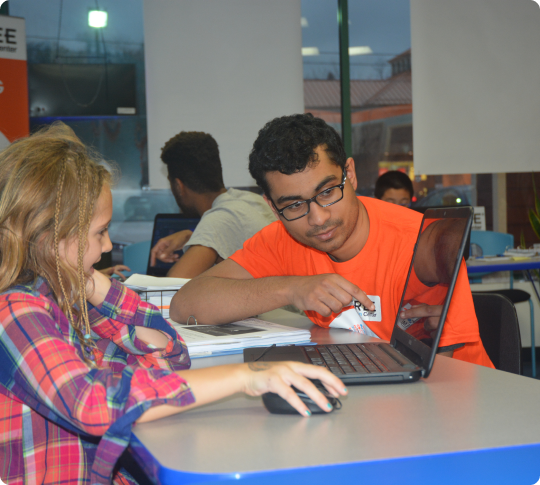
For students who are particularly motivated by hands-on activity, Stemtree’s approach can be a gateway to a strong academic foundation in STEM fields. The kind of critical thinking fostered through iterative design and careful debugging translates well to more formal studies in science and mathematics. It builds a mindset that values evidence, embraces experimentation, and appreciates the effort behind a well-structured solution. The same mindset serves students well in creative endeavors where problem solving is a creative act rather than a purely technical one. The cross-pollination between disciplines—coding, robotics, design thinking, and even narrative storytelling—helps students develop a flexible intellectual posture that can adapt to a rapidly changing tech landscape.
Not every project will be a home run, and that is an integral piece of the learning program as well. The acceptance of missteps as part of growth is a message that resonates with children who might otherwise feel stymied by difficult tasks. When a project stalls, the class shifts to a review of assumptions and a careful examination of the constraints that were not fully appreciated at the outset. The outcome is not just the resolution of a single problem but the emergence of a more robust approach to tackling new challenges. In higher education and professional life, this is precisely the kind of resilience that separates problem solvers from problem announcers. Children who learn to pause, reflect, and reframe a problem earlier in the process build a lasting competence that pays dividends in other areas of life.
The impact of Stemtree’s Spring TX programs can also be observed in how students begin to articulate value. They learn to tell a story about their work, explaining what their project does, why it matters, and who benefits from it. They learn to present a rationale for the design choices they made and to defend those choices when questioned by classmates or mentors. This communication skill is not incidental. It is a core lever that helps young technologists be heard and respected in collaborative environments, where multi-disciplinary teams rely on clear, persuasive dialogue to move projects forward.
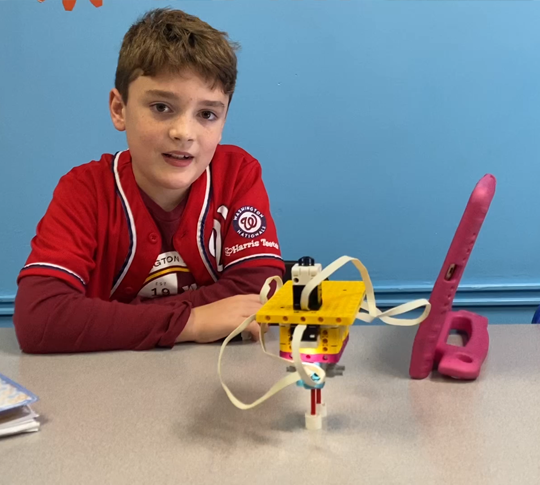
For those who want a practical snapshot of what a student gains over time, consider two focal areas that often emerge clearly after several months in a project-based program like Stemtree. First, there is the deepening fluency with computational thinking. Students begin to see code not as a labyrinth of syntax but as a set of steps that can be modularized, tested, and refined. They learn to predict outcomes, to anticipate edge cases, and to design for repeatability. This fluency translates into more efficient debugging, more thoughtful problem decomposition, and a greater tolerance for the iterative nature of software development. Second, there is a growth in collaboration and leadership. Even younger students stem camps spring texas discover the value of giving and receiving feedback respectfully, clarifying their own ideas before presenting them, and supporting teammates when the going gets tough. The class becomes a micro environment where leadership appears in small acts—sharing a clever approach, inviting quieter team members to contribute, or stepping in to reframe a problem so the group can move forward.
As with any comprehensive educational program, there are boundaries and edge cases worth understanding. For families whose child has immediate needs around accessibility or learning differences, it’s important to discuss how a project-based approach can be adapted. The beauty of this model lies in its flexibility, but it also requires thoughtful planning to ensure that every student can participate meaningfully. In practice, instructors at Stemtree tailor the projects, adjust pacing, and provide alternative pathways when necessary. The aim is not to dilute the experience but to preserve its integrity while expanding its inclusivity. The balance between challenge and support is delicate, and the best programs navigate it with experienced mentors who can read a room and adjust on the fly.
Finally, the narrative of Stemtree is incomplete without acknowledging the long arc of development it implies. A child who starts with curiosity about blinking LEDs and simple loops can, over time, contribute to a project that involves data visualization, user experience design, and collaborative problem solving at a scale that begins to resemble professional practice. The value lies not in immediate mastery of a single skill but in the cumulative effect of repeated, well-supported experiences across different domains. The child who completes a robotics project one season might return with an idea for a mobile app the next. The environment is designed to welcome that continuity, to reward curiosity, and to make the journey both challenging and enjoyable.
For parents exploring options in Spring TX, the key takeaway is this: a program that treats projects as living, growing endeavors offers something more enduring than a siloed course. It leads to a way of thinking that treats learning as a process rather than a finite product. It invites children to contribute to something larger than themselves, a community of learners who value curiosity, clarity, and craft. If your aim is to nurture problem solving, collaboration, and technical fluency in a way that feels purposeful and connected to the real world, Stemtree’s coding classes for kids provide a compelling path.
A final reflection on project-based education in this context is its potential to inspire a lifelong habit. The moment a student finishes a project and takes pride in what they have built is the moment a habit begins. The habit is not simply “to work hard.” It is a habit of trying, of testing, of listening to feedback, and of iterating toward a better version of an idea. It is a habit of collaboration, where success is measured not by solitary brilliance but by what a small team can accomplish together. It is a habit of communication, where explaining a concept clearly becomes part of the process of refining that concept. These are the kinds of outcomes that can have a lasting, positive impact as children move through adolescence and into adulthood.
If you’re drawn to the idea of your child building something tangible while learning to think with precision and empathy, Stemtree’s Spring TX programs are worth a closer look. The project-based framework is not a gimmick; it is a deliberate design that aligns with how real-world tech work happens. It honors curiosity while placing meaningful scaffolds around it. It invites kids to experiment, to own their learning, and to grow in a community that values both independence and teamwork. In a world where technology touches nearly every aspect of daily life, giving children the opportunity to understand, create, and communicate through STEM is a gift of lasting significance.
Two practical notes for families considering enrollment:
- Look for a clear project portfolio approach. Families should expect to see a narrative of learning that includes design decisions, iterations, and reflections, not just a finished product.
- Ask about mentor-led yet student-driven balance. The strongest programs combine expert guidance with ample space for students to lead, negotiate roles, and own outcomes.
In the end, Stemtree of Spring TX demonstrates what a well-constructed after school stem program can accomplish. It blends rigorous thinking with hands-on creation, weaving a culture of collaboration that helps children translate curiosity into capability. It is, in its essence, a small studio where imagination meets discipline and leaves with something the child can carry forward—confidence, competence, and a lived sense that they can make a difference through code, design, and invention.
Projects that start with a spark of curiosity become legacies of skill. For families who want to see their children not only consume technology but also shape it, Stemtree offers a rigorous, human-centered path. The focus on project-based learning is not a trend but a practical philosophy that, when applied with care, yields learners who are prepared for the complexities of modern problem solving. The Spring TX location embodies this approach with a quiet intensity, a steady cadence, and a community that believes in keeping the door open to the next big idea every child can envision.