Stemtree of Spring TX Kids Education Center: Success Stories
The first thing you notice when you walk into the Stemtree learning center in Spring is the hum of focused energy. Chalkboard walls glow with diagrams of circuits, pathways of algebraic thought, and the bright threads of kids’ projects that started as questions and became small victories. Over years of teaching, I’ve learned that education in this space isn’t a static transfer of facts. It is a living practice of curiosity, patience, and iterative problem solving. The success stories you hear here are never about a single score or a one size fits all diploma. They are the threads that connect a curious child to a confident young coder, a patient learner who can troubleshoot a stubborn bug, and a family that recognizes progress as a daily conversation rather than a quarterly milestone.
The stems and branches of Stemtree in Spring TX stretch across multiple programs. There are coding classes for kids that begin with the simplest block based games and extend to more sophisticated Python projects, robotics challenges, and even introductory computer science concepts. There are STEM camps that feel more like immersive playgrounds than camps in the old sense of the word. There are tutoring sessions that step in when a student faces a concept that refuses to settle, and there are early childhood education stem offerings that seed curiosity long before a student reaches middle school. Each of these pieces has its own rhythm, yet they share a common DNA: a practical emphasis on making ideas tangible, a respect for the pace at which a child learns, and a commitment to showing work that makes thinking visible.
In my years working with families around Spring TX, I’ve observed four core truths about how Stemtree nurtures success. First, kids learn best when they can connect ideas to their lived experiences. A seventh grader who loves basketball will grasp data analysis more readily if we frame statistics around shot selection, player efficiency, and feedback loops that mimic coaching decisions. A second grader who adores animals will engage more deeply with robotics if the task resembles a creature with a routine it must learn. The third truth is that progress happens in small, visible steps. We celebrate the tiny triumphs—the moment a child writes a line of code that runs without crashing, or finally tunes a sensor to a predictable threshold. And finally, sustained growth emerges from consistent practice anchored in supportive feedback. Stemtree leans into this with structured programming sessions, friendly competition framed as collaboration, and a culture that treats mistakes as the raw material of mastery.
If you want a vivid snapshot of how these ideas surface in real life, consider the summer stem camp experience. The Spring TX summer stem camp is not a one week, quick fix. It’s an ongoing arc designed to maintain curiosity through the long Texas summer while giving kids tools they can carry back to school and beyond. The daily rhythm blends hands on exploration with short reflective moments that help students articulate what they tried, what surprised them, and what they would do differently next time. Campers move from building a simple circuit to programming it to respond to dynamic inputs, from creating a mini game to debugging it with a peer mentor. The atmosphere rewards collaboration and risk taking. The result is a cohort of students who see themselves as problem solvers rather than problem acquirers.
For families who are evaluating tutoring center offerings, Stemtree’s approach to tutoring is not merely about catching up or boosting a grade. It is about building a framework of thinking that serves students across subjects. When a tutoring session centers on a stubborn math concept, we don’t simply present the answer. We outline a strategy: define the goal, deconstruct the problem into manageable steps, test a small hypothesis, then refine the approach based on feedback. This meta-learning mindset helps students recognize patterns in the problems they face rather than memorizing procedures that work only in one context. Students begin to see how a single concept connects across subjects, how logical structure underpins both coding and math, and how practice translates into confidence.
The learning center for kids at Stemtree doesn’t exist in isolation. It sits within a broader ecosystem that values access to high quality STEM education. The programs aren’t designed to overwhelm. They are designed to empower, offering a clear pathway from introductory concepts to more advanced topics, while staying sensitive to a child’s pace and interests. For some families, that means starting with a friendly, visually stimulating early childhood education stem program that introduces sequencing, pattern recognition, and basic engineering ideas through play. For others, the path begins with a deep dive into coding classes for kids tailored to age and skill level. And for still others, it means a longer commitment to ongoing STEM camps that keep kids engaged through the summer and into the school year.
Let me tell you about a few students who illuminate what I’m describing. There is a fifth grader named Maya who joined Stemtree with only a faint sense that coding could be about more than games. Over the course of a year in our coding classes for kids stemtree.com, she moved from dragging blocks in a drag-and-drop environment to designing a small weather station using Python and an array of sensors. The challenge wasn’t the syntax; it was the reliability problem. Sometimes the device would misread the data. Another student, Diego, started in a robotics track and discovered that his strength lay in system thinking. He learned to break a conveyor mechanism into subtasks, to sequence actions in code, and to anticipate how latency in one module would cascade through the system. He walked away at the end of the season with a working robot and a new sense of how to approach complex projects. Then there is a younger learner, Noor, who joined an early childhood stem program. She didn’t know how to spell out a plan, but she could arrange blocks to create a functioning mechanism and tell a story about what it did. When Noor moved into more formal coding tasks, she carried that narrative instinct with her, translating her ideas into readable code comments and simple documentation that helped her peers understand her approach.
Beyond individual stories, there is a pattern of growth across cohorts that speaks to our overall philosophy. In our STEM camps, students learn not only technical skills but essential soft skills. They learn to articulate a problem clearly, to listen to a teammate, to compromise on an approach when it isn’t working, and to take responsibility for the parts of a project that are mine to own. These social dynamics matter as much as the technical capabilities. A well functioning project team mirrors real workplace environments, and we aim to prepare students for those environments by giving them a safe place to practice communicating their ideas, testing their assumptions, and accepting feedback from mentors and peers.
The curriculum across Stemtree’s offerings is designed with several practical constraints in mind. We want materials that are age appropriate yet capable of scaling in complexity. We want hands on activities that clearly connect to real world problems. We want assessment that is informative, not punitive. We want educators who can read a room, recognize when a student is pausing to gather thoughts, and adjust the pace accordingly. All of these constraints shape how we structure lessons and how we talk to families about progress. It is common to adjust a lesson on the fly because a group brings a fresh line of inquiry to the table. That flexibility is not a weakness; it is a reflection of a classroom that values genuine curiosity over a perfectly scripted learning path.
In practice, the daily life of a Stemtree student unfolds through careful sequencing of activities. A typical coding class for kids might begin with a quick warm up that reintroduces a concept from the previous session. The warm up isn’t a dry drill; it’s a living exercise designed to reveal where a student is on the concept map. If a student is stuck, the instructor will guide them with probing questions rather than giving away the answer. The next phase revolves around a collaborative project where students contribute distinct pieces that integrate into a complete system. Some students focus on logic and control flow, others on user interaction and interface. The final phase is a reflective moment where students explain what they built and why it behaves the way it does. They practice explaining their thinking aloud, a skill that translates into clearer communication in any domain.
This emphasis on articulation also enriches family engagement. Parents are invited to see demonstrations, to hear how a project was approached, and to witness the evolution of a student’s problem solving. The conversations with families shift from a simple assessment of performance to a richer discussion about growth. A parent might learn that their child’s approach to a problem changed from jumping to a solution to pausing to map out a plan. That shift alone is a meaningful milestone because it signals a shift in mindset toward deliberate practice and thoughtful iteration. We’ve found that when families are part of the learning journey in this way, the child internalizes the value of effort and sees their progress as a cumulative result of consistent work.
Trade offs and limitations are part of any educational strategy, and Stemtree is no exception. The field of STEM education is full of opportunities but also has its boundaries. For instance, there are moments when a student’s curiosity runs ahead of the available scaffolding. In those moments, we lean on mentors who can connect a student’s interest to a scaffolded pathway, providing just enough structure to sustain momentum without stifling curiosity. There are also times when a given technology becomes a distraction from core learning objectives. In those cases we step back, simplify the task, and return to fundamentals. We balance the desire to offer a broad range of experiences with the reality of time, materials, and the capacity of a student to absorb new concepts without burnout. The aim is not to turn every child into a prodigy overnight, but to cultivate a steady, resilient curiosity that will serve them across school and life.
Another recurring theme is the role of mentors in shaping outcomes. The mentors at Stemtree are not distant experts delivering lectures. They are practitioners who have rolled up their sleeves to work with students on concrete projects. They come from diverse backgrounds, including computer science, engineering, education, and even the arts. That variety matters because it models to students that problem solving is multi dimensional. A project might require careful data analysis, precise fabrication, careful documentation, and a touch of creative storytelling to present a final portfolio. The mentor’s job is to weave these threads into a coherent learning experience where a student feels seen and capable. These relationships often become a catalyst for a student to pursue more ambitious goals, such as competing in a regional robotics tournament or applying to a summer internship program at a local tech hub.
What does success look like at the end of a term or a course? It varies by student, and that variety is a strength, not a flaw. Some families measure success by finished projects—a working robot, a functional app, or a small data project with visible outputs. Others look at the growth curve—an individual who gains confidence, who speaks more clearly about their process, who demonstrates perseverance when a solution seems elusive. For some, success is the shift from passivity in class to active participation, a newfound willingness to ask questions, a habit of seeking feedback, and the ability to iteratively improve a solution. In practice, we try to capture these outcomes through a mix of project portfolios, reflective writing, and direct demonstrations during open house events. The goal is not to reduce learning to a single metric but to assemble a multi facet portrait of a student who is moving forward.
The landscape of STEM education is broad, and families will inevitably ask how Stemtree compares with other options in Spring TX. The honest answer is that every program has its distinctive strengths. Stemtree’s core advantage lies in the integrated approach to coding, robotics classes spring tx hands on projects, and ongoing mentorship. We do not view coding as a narrow skill but as a cognitive toolkit: the ability to structure problems, to hypothesize, to test, to learn from failure, and to communicate results clearly. Our camps and classes provide a continuum rather than isolated experiences. A student who begins in a beginner coding class might ultimately participate in a summer stem camp, then return for a tutoring session to refine a project, and finally contribute to a capstone portfolio in collaboration with peers. That continuity helps students see themselves as builders and thinkers rather than spectators of the digital world.
The learning center for kids here is deeply respectful of each learner’s background. Some families arrive with a strong mathematical foundation, others with limited exposure to technology. The program honors that diversity by meeting each student where they are and scaffolding toward greater independence. We maintain a careful balance between structure and freedom. On one hand, there are defined objectives, clear rubrics, and predictable routines. On the other hand, there is space for spontaneous inquiry, a chance for a student to wander into a topic that excites them and then chart a personal path forward. This flexibility is essential in cultivating intrinsic motivation, a quality that outlasts any particular concept or tool.
If you are exploring Stemtree for your child, a practical route is to observe a session or participate in a family information night. You will hear directly from mentors about the design decisions behind the curriculum, the assessment approach, and the ways in which projects are curated to align with student interests. You will also see the tangible artifacts that demonstrate learning progress: code snapshots, circuit diagrams, robotics build logs, and polished portfolios that capture the arc of a project from initial sketch to final presentation. Observing these artifacts is often more persuasive than any brochure because they tell a story of concrete effort, incremental mastery, and the pride that comes from seeing an idea take shape.
In terms of access and equity, Stemtree strives to reduce barriers wherever possible. We recognize that transportation, scheduling, and family resources can impact a student’s ability to participate fully. Where feasible, we partner with local community programs and summer camps that extend access to a broader group of learners. We also design tiered programming that supports learners with varying levels of prior experience, ensuring that beginners can join with confidence and that advanced students can push their boundaries without feeling boxed in. Our hope is to nurture a diverse cohort of students who bring different strengths to a shared learning journey, because collaboration among varied perspectives often yields the most inventive outcomes.
There is a recurring motif in the success stories that may seem small but matters deeply. It is the practice of intentional reflection. After each project, students are asked to articulate what worked, what didn’t, and what they would do differently next time. This reflection is not a form of self chastisement. It is a training ground for resilience, a habit that helps young minds move through friction without becoming discouraged. When a student learns to own a misstep, they gain the power to steer their learning forward. When they learn to celebrate the small wins, they build a reserve of confidence that weatherproofs them against the inevitable challenges they will encounter later.
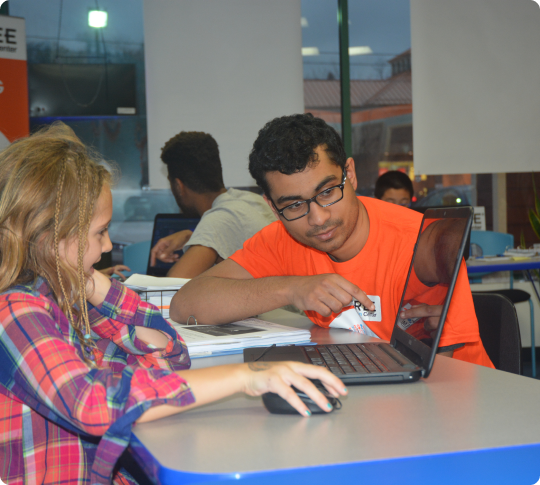
In closing, the Stemtree of Spring TX education center is more than a shop floor for projects and a classroom for algorithms. It is a community that treats curiosity as a moral good and curiosity as something that can be cultivated through practice, feedback, and meaningful collaboration. The stories of Maya, Diego, Noor, and dozens of other learners are proof that kids are capable of building sophisticated things when they have guidance that respects their pace and genuinely cares about their growth. Whether a family is seeking coding classes for kids stemtree.com or a full spectrum of STEM camps stemtree.com, the aim remains consistent: give students the means to explore, the support to persist, and the audience they deserve to celebrate their progress.
For families curious about what makes a program like Stemtree distinct in the Spring TX area, consider the underpinnings that bind success stories into a coherent pattern. There is a steady emphasis on bridging theory and practice. Students are not asked to memorize isolated facts; they are invited to construct models, test them, and refine their approach in a collaborative setting. There is a deliberate cultivation of communication skills. Students explain their reasoning to peers and mentors, and they learn to defend their decisions with evidence rather than bravado. There is a real world orientation. Projects connect to everyday technologies and issues, from energy efficiency to data literacy, from user experience to accessibility. Finally, there is a long view. The center is careful about pacing and progression, guiding learners in a way that respects their curiosity while ensuring that growth remains robust and durable.
A note on scope and scale: Stemtree’s offerings are designed to adapt to a wide range of student ages and starting points. For younger children, the focus leans toward exploration, play, and foundational cognitive skills that will later support formal coding and engineering workflows. For middle schoolers, projects deepen in complexity, introducing more rigorous programming concepts, data analysis, and collaborative design. For high school students, the center leans into authentic workflows—portfolio development, mentorship relationships, and exposure to career pathways in STEM fields. Across this spectrum, the thread remains intact: meaningful problem solving, clear communication, and a culture that values patient, persistent effort.
What does this mean for a family looking ahead? It means a promise of a learning environment that not only teaches but also invites students to participate in their own education. It means a place where a child who loves games can discover how games are built, why certain mechanics engage players, and how to design systems that scale. It means a setting where a student who has always enjoyed tinkering can formalize that curiosity into a structured skill set that translates into schoolwork and even future opportunities. It means, ultimately, a framework in which progress is visible, celebrated, and used as fuel for the next challenge.
As with any serious commitment, there are practical steps to take if you want to begin with Stemtree. You might start by visiting the Spring TX campus for a tour and a conversation with mentors about your child’s interests and goals. Bring questions about schedule flexibility, the balance between group work and individual mentorship, and any accommodations that may be needed for a learner with specific needs. If you decide to enroll, you will likely begin with a placement experience that helps the instructors align the curriculum to your child’s current level and future aims. You will then enter a cycle of ongoing projects, reflections, and demonstrations that create a tangible narrative of growth.
The success stories I’ve described do not hinge on a single moment. They are built through consistent support, guided exploration, and a learner centered ethos that treats every child as capable of contributing to a shared project. The Stemtree of Spring TX education center is designed to be a long term partner in a family’s educational journey, offering a space where curiosity is welcomed, practice is valued, and progress is tangible. If you are seeking a program that blends coding classes for kids with hands on STEM experiences, if you want a summer stem camp that keeps minds active and spirits engaged, if you desire a tutoring center that views challenges as invitations rather than obstacles, Stemtree stands ready to welcome your learner into a community that believes in possibility and the real, practical steps that turn enthusiasm into expertise.
Two short reflections from the field may help crystallize why this work matters. First, the most persistent learners aren’t the ones who absorb everything the fastest; they are the ones who stay engaged when a roadblock appears, who ask brave questions in the face of uncertainty, and who turn those questions into small experiments that reveal a path forward. Second, a child’s sense of agency grows when they can point to a finished project and say, this is mine, with the support of mentors and peers who stood with them along the way. When those elements converge, a student’s confidence expands not as a participant in a class but as an owner of their own learning journey.
At Stemtree, we celebrate the fact that education is not a one size fits all enterprise. It is a collection of pathways that intersect, diverge, and eventually converge toward meaningful outcomes. The success stories from Spring TX are not a trophy case of perfect finishes. They are a testament to effort that compounds, to mentorship that guides, and to a learning culture that treats every student as a future problem solver, designer, and collaborator. If your family is ready to explore what that looks like in practice, you will find a place here that respects where your child comes from and invites them to envision where they might go. The road may be winding, but the signs along the way point toward greater curiosity, steadier progress, and a deeper sense of what it means to learn with purpose.